
Stump Grinding In Hot Springs, AR
Professional stump grinding with clean, controlled results.
Fully insured │ Locally owned & operated
Residential & commercial │Emergency response available
When Stump Grinding Is the Right Choice
After a tree is removed, the stump that’s left behind can quickly become more than just an eyesore. Stumps often interfere with landscaping plans, create tripping hazards, attract pests, and make routine yard maintenance more difficult. In many cases, grinding the stump below ground level is the cleanest and most practical way to fully finish the job.
Stump grinding is typically recommended when a stump sits in high-traffic areas such as lawns, walkways, driveways, or near patios and play spaces. Even small stumps can cause problems over time, especially when roots begin to surface or the wood starts to decay. As decomposition progresses, stumps can attract insects and create uneven ground that’s difficult to mow or maintain.
Grinding is also the preferred option when homeowners want to reclaim usable space. Whether you’re planning to re-seed grass, install landscaping, or simply restore a clean look to the yard, grinding removes the bulk of the stump without the disruption of full excavation. Unlike digging or pulling, stump grinding minimizes damage to surrounding soil and nearby structures.
In short, stump grinding is the final step that turns a tree removal from “mostly finished” into properly completed.
Our Stump Grinding Process
Stump grinding may look straightforward, but doing it correctly requires planning, proper equipment, and attention to surrounding conditions. A professional approach ensures the stump is removed efficiently without unnecessary damage to the property.
1) Site inspection and stump assessment
We start by evaluating the stump’s size, location, and surrounding area. This includes identifying nearby structures, landscaping features, underground utilities, and access constraints. Each stump presents different challenges depending on root spread and soil conditions.
2) Equipment positioning and safety setup
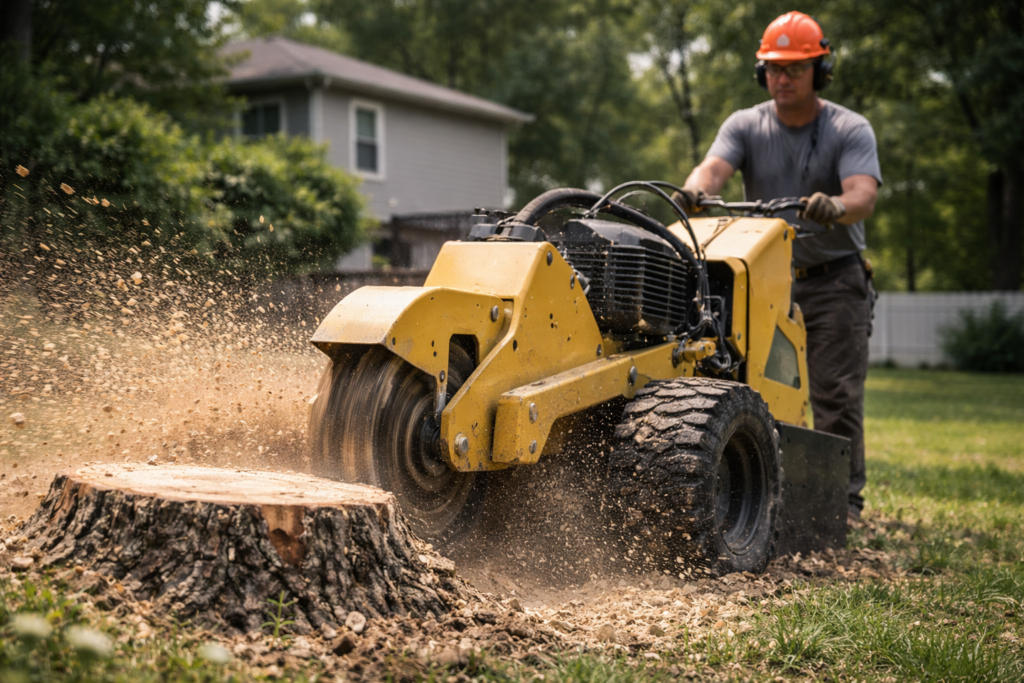
Grinding equipment is positioned carefully to maintain stability and control. Protective measures are taken to manage flying debris, which is a normal part of the grinding process. Clear work zones help keep people, pets, and nearby property safe.
3) Grinding below ground level
The stump is ground down below the surface—typically several inches beneath grade—so the area can be restored cleanly. This eliminates visible wood while allowing the ground above to be leveled or landscaped.
4) Debris handling and site cleanup
Wood chips produced during grinding can be hauled away or left on site, depending on your preference. After grinding, the area is raked and prepared so it can be filled, seeded, or landscaped as needed. The goal is a smooth, predictable process that leaves the site usable again—not torn up or half finished.
The goal is a smooth, predictable process that leaves the site usable again—not torn up or half finished.
Stump grinding is about finishing the job cleanly. Removing the remaining stump below grade helps prevent regrowth, eliminates trip hazards, and makes the area usable again for landscaping or replanting. The process is controlled and contained, keeping disruption to the surrounding yard minimal.
Safety & Professional Standards
Stump grinding involves powerful rotating equipment, underground considerations, and debris movement. While it’s often viewed as lower risk than tree removal, it still requires professional handling to avoid damage or injury.
One of the most important safety considerations is utility awareness. Underground lines for water, gas, electrical, or irrigation systems can be present near stumps. Identifying and respecting these utilities before grinding begins is critical to preventing costly or dangerous damage.
Debris control is another key factor. Stump grinders produce wood chips at high speed, and professional operators plan equipment placement and shielding to keep debris contained. This protects nearby structures, vehicles, windows, and landscaping.
Finally, proper depth matters. Grinding too shallow leaves remnants that resurface later; grinding unnecessarily deep can disturb soil stability. A professional approach balances effective removal with minimal disruption.
Good stump grinding doesn’t just remove wood—it manages risk, protects the property, and leaves a clean result.
Ready To Get Started?
Residential & Commercial Stump Grinding
Residential stump grinding is often about restoring the yard after tree removal. Homeowners typically want to eliminate trip hazards, make mowing easier, and improve the appearance of their property. Grinding allows lawns to be repaired, gardens to be planted, and outdoor spaces to be used without obstruction.
Common residential reasons include:
- Stumps left after tree removal
- Safety concerns for children or guests
- Preparing areas for landscaping or hardscaping
- Improving curb appeal
Commercial stump grinding focuses on functionality and liability. Stumps on commercial properties, rental units, or HOA grounds can interfere with maintenance, create safety concerns, or detract from the property’s appearance. Grinding helps maintain clean, usable spaces and reduces the risk of accidents or complaints.
Whether residential or commercial, the objective is the same: remove the obstacle cleanly so the property can move forward.
Local Experience in Hot Springs
Local conditions matter when it comes to stump grinding. Soil composition, moisture levels, and terrain all influence how grinding is performed and how the area should be restored afterward.
In the Hot Springs area, saturated soils and sloped properties are common, which can affect equipment positioning and ground stability. Understanding how these conditions interact with root systems helps ensure grinding is done safely and effectively.
Local experience also means knowing what homeowners typically want next—whether that’s re-seeding grass, adding landscaping, or preparing space for future construction. A practical approach doesn’t stop at grinding the stump; it considers how the space will be used afterward.
Stump Grinding FAQs
Is stump grinding necessary after tree removal?
It isn’t always required, but it’s often recommended. Leaving a stump can create safety hazards, attract pests, and limit how the space can be used. Grinding removes those issues without major disruption.
How deep does stump grinding go?
Stumps are typically ground several inches below the surface, allowing the area to be filled and leveled. Exact depth depends on future plans for the space.
What happens to the wood chips?
Wood chips can be removed or left on site, depending on your preference. Some homeowners use them as mulch; others prefer full removal.
Will the tree grow back after grinding?
Grinding removes the visible stump but doesn’t remove the entire root system. In some species, regrowth is possible, though it’s usually minimal. Additional treatment options can be discussed if regrowth is a concern.
Can you grind stumps near structures or fences?
Yes, but location matters. Grinding near structures requires careful positioning and debris control to avoid damage. An on-site assessment determines what’s safe.
Is cleanup included?
Professional stump grinding typically includes raking and site cleanup. Details such as debris removal or fill material should be clearly outlined in the estimate.
Need Stump Grinding in Hot Springs?
Fast, straightforward estimates. Call now or request your free assessment today.