Tree Trimming & Pruning in Hot Springs, AR
Professional pruning to improve safety, tree health, and appearance.
Fully insured │ Locally owned & operated
Residential & commercial │Emergency response available
When Tree Trimming Is the Right Choice
Tree trimming and pruning are often the safest and most cost-effective way to manage trees—especially when the structure is sound, but growth, damage, or imbalance has started to create risk. Many issues that homeowners worry about don’t require removal at all when they’re addressed early and correctly.
Pruning is commonly recommended when trees develop dead, weakened, or storm-damaged limbs, or when growth begins to interfere with roofs, driveways, fences, or overhead clearance areas. Left unaddressed, these issues can increase the likelihood of limb failure during storms, cause property damage, or accelerate decline in the tree’s overall health.
Trimming is also important for managing canopy balance and weight distribution. Trees that grow unevenly or become top-heavy are more vulnerable to wind and gravity stress, particularly after periods of heavy rain or saturated soil. In many cases, selective pruning reduces that risk significantly while preserving the tree and extending its lifespan.
When done properly, pruning improves safety, encourages healthy growth patterns, and maintains the appearance of your property—without the disruption or expense of full removal. And when pruning isn’t enough, a professional evaluation helps make that determination before problems escalate.
Our Tree Trimming & Pruning Process
1) On-site evaluation
We start by assessing the tree’s overall health, structure, and growth pattern. This includes identifying deadwood, structural weaknesses, clearance concerns, and how the tree responds to prevailing weather and site conditions.
2) Identify goals and risk areas
Not all pruning serves the same purpose. Sometimes the goal is safety and clearance; other times it’s improving structure, reducing wind load, or correcting long-term growth issues. We identify which limbs matter and which should remain untouched.
3) Selective pruning, not over-cutting
Cuts are made deliberately to reduce stress on the tree. Over-thinning or topping can create long-term damage, increase decay, and cause aggressive regrowth. Our approach focuses on balance, stability, and longevity.
4) Property protection and debris control
Before cutting begins, nearby structures, landscaping, and access points are protected. Limbs are lowered and managed to prevent uncontrolled swings or impacts.
5) Cleanup and final review
Debris is removed or staged according to the scope, and the finished result is reviewed to ensure the tree remains stable, balanced, and visually clean.
Proper pruning isn’t about cutting more—it’s about cutting with purpose. Strategic trimming reduces stress on the tree, improves structure, and lowers the chance of limb failure over time. When done correctly, pruning helps trees grow more evenly and withstand wind, weight, and seasonal changes without creating new risk.
Safety & Professional Pruning Standards
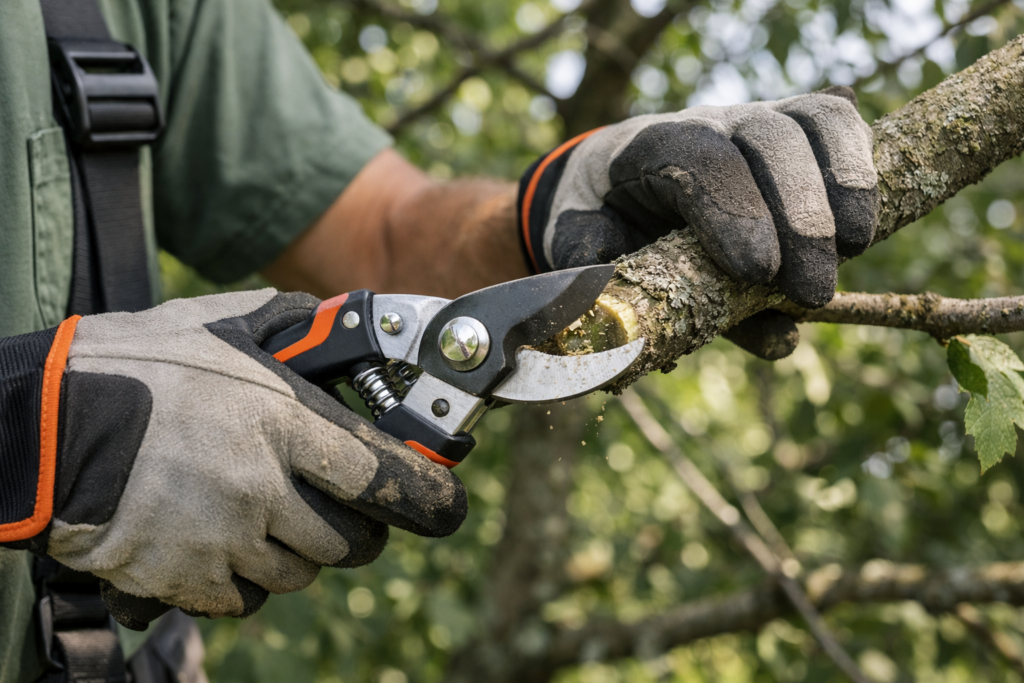
Tree trimming may look straightforward, but improper cuts can permanently damage a tree—or create hazards that weren’t there before. Professional standards exist for a reason, and safe pruning requires both training and restraint.
One of the most common mistakes in amateur trimming is excessive removal. Over-pruning weakens structural integrity, exposes the tree to decay, and encourages unstable regrowth. Proper pruning preserves the tree’s natural form while addressing specific risks.
Safety planning is also critical when working near structures, fences, vehicles, or power lines. Trees react unpredictably once cuts begin, especially when weight distribution changes mid-process. Controlled techniques help manage those forces and reduce the risk of damage.
Electrical hazards require additional caution. Work near energized lines follows strict safety guidelines and minimum approach distances. In many cases, coordination with utility providers or specialized line-clearance procedures is required before pruning can safely proceed.
Professional pruning isn’t about speed—it’s about control, judgment, and choosing the right cut for the right reason.
Ready To Get Started?
Residential & Commercial Tree Trimming Services
Residential tree trimming often focuses on safety, appearance, and long-term maintenance. Homeowners commonly request pruning to clear roofs, reduce shade issues, manage overgrown canopies, or remove limbs that pose a risk during storms. The goal is to keep trees healthy while protecting the home and surrounding property.
Commercial tree trimming typically involves different priorities. Maintaining clear walkways, parking areas, signage visibility, and safe access points is essential for businesses, HOAs, and rental properties. Regular trimming helps reduce liability exposure while keeping properties functional and presentable.
Whether the project involves a single yard tree or multiple trees across a commercial property, the objective remains the same: address risk early, keep growth under control, and leave the site clean and predictable.
Local Experience in Hot Springs
Tree care isn’t one-size-fits-all, especially in regions that experience frequent storms, saturated soils, and shifting weather patterns. Local experience matters because it shapes how trees grow, how they fail, and how they should be maintained.
In the Hot Springs area, certain species respond differently to wind load, moisture levels, and seasonal stress. Storm damage often reveals weaknesses that aren’t obvious during calm conditions, making proactive trimming an important part of long-term safety planning.
Local knowledge also helps anticipate site-specific challenges—such as soil stability, slope conditions, and drainage issues—that influence pruning decisions. Understanding how these factors interact with tree structure allows for more accurate recommendations and better outcomes over time.
Tree Trimming & Pruning FAQs
How often should trees be trimmed?
Most mature trees benefit from periodic trimming every few years, though timing depends on species, growth rate, and site conditions. Younger trees may require more frequent structural pruning early on.
What’s the difference between trimming and pruning?
The terms are often used interchangeably, but pruning typically refers to selective cuts made for health and structure, while trimming may focus more on size, clearance, and appearance. Both require proper technique.
Can over-trimming damage a tree?
Yes. Removing too much canopy can stress the tree, weaken its structure, and lead to decay or unstable regrowth. Proper pruning avoids excessive removal.
Is trimming enough, or do I need tree removal?
In many cases, trimming is sufficient. If a tree is severely compromised, removal may be the safer option. An on-site assessment helps determine the best course of action.
Can you trim trees near power lines?
Work near power lines involves elevated risk and specific safety requirements. Some situations require coordination with the utility company or trained line-clearance professionals.
Is cleanup included?
In most professional trimming jobs, debris removal and site cleanup are part of the scope. Details should always be clearly outlined in the estimate.
Need Trimming / Pruning in Hot Springs?
Fast, straightforward estimates. Call now or request your free assessment today.